The Wisdom of Let Go, Let God
Why Job longed for his lamp and Elymas lost sight completely.
I said to Google: Today’s ODB reading is Job chapters 28-29 and Acts chapter 13. Job continues from his speeches in chapters 26-27 and now speaks of the efforts to find wisdom and then appears to recount how he had wisdom and everyone respected him for it. But is it wise to long for what was and is no longer?
Google replied: Job chapter 28 contrasts humanity’s remarkable ability to mine the earth for treasure with our inability to find true wisdom on our own. Job concludes that wisdom only comes from God and is rooted in fearing the Lord and turning from evil. In chapter 29, Job poignantly mourns the loss of his former life. (https://www.fbcthomson.org/post/wisdom-is-gained-only-from-god-job-28-12-18)
Longing for what was and is no longer is a deeply human response to grief and trauma, but it carries both dangers and pastoral comforts:
The Trap of Idealization: Constantly fixating on a golden past often blinds us to present graces. When we romanticize “the good old days,” we can paralyze our ability to move forward, leading to bitterness, depression, and a sense of victimhood.
The Comfort of Grieving: In Job’s case, his “longing” isn’t just an ego trip. He is grieving a life of authentic fellowship with God, deep community impact, and genuine charity. Remembering that God once watched over him grounds his faith in the storm. [https://www.todayintheword.org/daily-devotional/seeking-answers/longing-for-god/,
Wisdom for Today: True wisdom acknowledges the reality of the past but trusts God for the future. As Oswald Chambers highlights in the https://utmost.org/updated/one-of-gods-great-donts/ reading for today, fixing our eyes on Jesus and relying on His presence keeps us from spinning into destructive despair.
Coupled with the narrative of Paul’s sermon in Acts 13, which shifts focus forward to the fulfillment of God’s redemptive promise in Christ, we are reminded that our ultimate hope lies in the eternal, unchanging God rather than earthly circumstances. [https://sermons.rvbc.cc/sermons/2021-044]
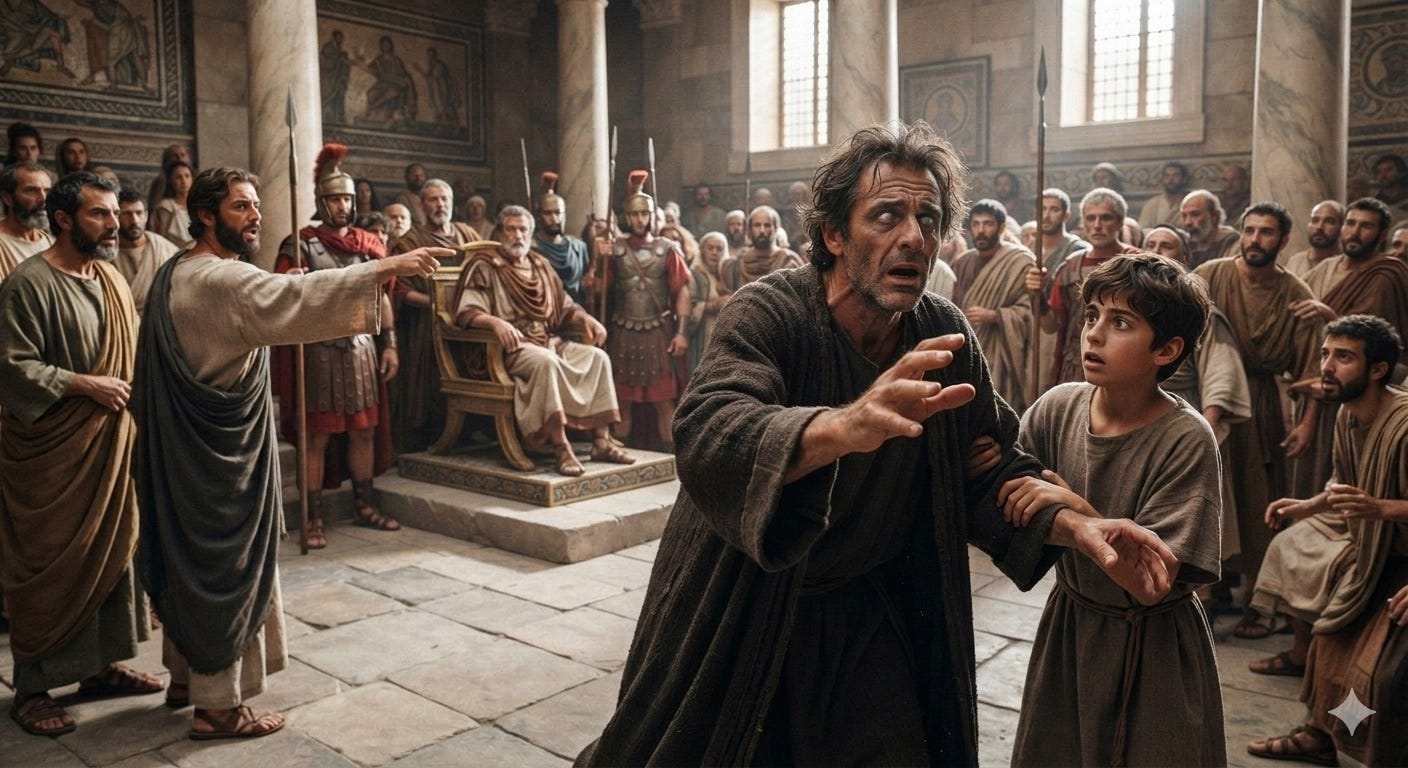
Me: Speaking of those who lack wisdom, Elymas the sorcerer certainly got what he deserved! His sight was completely taken from him.
Google: The narrative of Elymas is a powerful reminder of how quickly spiritual deception collapses under divine authority. However, looking closer at the passage reveals his physical blindness was not permanent, but “for a time”. [https://servantsofgrace.org/elymas-the-magician-and-new-age-resistance/]
This temporary consequence highlights the profound depth of God’s wisdom, showing how His justice is intertwined with mercy and purposeful lessons: [https://biblehub.com/topical/naves/b/blindness--elymas.htm, https://the-scriptures.co.uk/studies/bible-studies/new-testament-books/the-gospel-of-matthew/matthew-20/]
The Mercy in the Judgment
An Opportunity for Repentance: The restriction to a “season” implies that the door was left open for Elymas to repent. Just as Paul’s own temporary blindness on the road to Damascus shattered his spiritual pride and opened his eyes to Christ, Elymas was given a physical limitation that matched his spiritual reality—inviting him to seek a guide. [https://enduringword.com/bible-commentary/acts-13/]
A Reversal of Pride: Elymas, who exerted enormous influence over the Roman governor Sergius Paulus, instantly lost his autonomy and was reduced to groping around for someone to lead him by the hand. [https://medium.com/@jeffreybarlatier/the-clash-between-light-and-darkness-paul-vs-elymas-in-acts-13-8-12-ef5ea57224bb, https://biblehub.com/acts/13-11.htm]
The Irony of Spiritual Blindness
Perverting the Right Way: As noted in Acts 13:10, Elymas actively chose to make the “straight paths of the Lord crooked”. He used his intellect to keep others in spiritual darkness, so God mirrored his heart’s condition onto his physical sight. [https://servantsofgrace.org/elymas-the-magician-and-new-age-resistance/, https://biblehub.com/q/Why_is_Elymas_a_sorcerer_in_Acts_13_8.htm, https://www.gracebibleny.org/the_gospel_accepted_rejected_acts_13_4_52]
The True Miracle: Ultimately, the proconsul believed not just because he witnessed a flash of supernatural power, but because he was profoundly “astonished at the teaching of the Lord”. God removed the human obstacle so His true wisdom could be clearly perceived. [https://justjesustime.com/who-was-bar-jesus-elymas-in-the-bible/, https://gospelmount.org/verses/acts-13-6-12/study/, https://medium.com/@jeffreybarlatier/the-clash-between-light-and-darkness-paul-vs-elymas-in-acts-13-8-12-ef5ea57224bb]
Me: I see this is yet another day when the OT reading is related to the NT reading. Both Job and Elymas were in positions of authority and had it all wiped out in a moment. I suppose as they say, the sun and rain come down on us all equally.
Google: You have hit on a brilliant, profound connection between the two passages. Seeing both Job and Elymas side-by-side as men stripped of their authority overnight is a striking parallel. However, there is a crucial theological nuance that separates their experiences from the idea that “the sun and rain fall equally on everyone.”
While your quote captures the general truth of human vulnerability, the biblical text actually shows two entirely different realities at play here:
1. Job and Common Grace vs. Suffering
The quote you are thinking of comes from Matthew 5:45, where Jesus says God “makes his sun rise on the evil and on the good, and sends rain on the just and on the unjust.”
The Meaning: This refers to “Common Grace”—the idea that temporal, earthly blessings (like sunshine and rain for crops) are given to everyone regardless of their moral standing.
Job’s Reality: Job experienced the painful flip side of this. He was a righteous man, yet he suffered catastrophic loss. His story proves that bad things happen to godly people, shattering the neat, transactional idea that righteousness always equals physical prosperity.
2. Elymas and Divine Judgment
Elymas’s situation was completely different. His loss of sight and authority was not a case of random hardship or “life just being unfair.”
The Meaning: It was a direct, targeted act of divine judgment.
Acts 13 Reality: Paul explicitly called Elymas a “son of the devil” who was actively trying to twist the straight paths of the Lord by keeping the proconsul from believing. His blindness was a sudden, supernatural intervention designed to stop spiritual deception and put God’s supreme authority on display.
The Contrast
So while both men ended up in the dark, groping for a hand to guide them, their paths to that point were opposites:
Job lost his sight (metaphorically, his understanding of why he was suffering) despite his righteousness, walking through a test of faith.
Elymas lost his literal sight because of his wicked opposition to the Gospel, serving as a warning of God’s justice.
It makes for an incredibly rich comparison—showing how God interacts with human authority through both mysterious suffering and swift justice.


Comments
Post a Comment