Behind the Label: The Great Oatmeal Contamination
Uncovering the Canadian Oat Trade--and the dangers within a bowl of oats!
July 18, 2026
I asked Google: What cereals are least likely to cause cancer and not contaminated with pesticide?
Google replied: To minimize your exposure to pesticides like glyphosate and avoid artificial preservatives linked to health concerns, you should switch to Certified Organic cereals or brands that carry the "Glyphosate Residue Free" certification. Conventional oat- and wheat-based cereals have frequently tested positive for pesticide residues. [1, 2, 3, 4, 5]
The following brands and specific products are dedicated to clean, pesticide-free ingredients:
1. One Degree Organic Foods
This brand is highly recommended by nutritionists and clean-food advocates because all of their grains are third-party verified to be glyphosate-free. [1, 2]
Popular Products: Sprouted O's, Sprouted Rolled Oats, and Sprouted Ancient Maize Flakes.
2. Nature's Path Organic
Nature’s Path is a leading organic cereal manufacturer. Because they are certified organic, their ingredients are grown without synthetic pesticides or herbicides. [1, 2]
Popular Products: Heritage Flakes (made with 6 ancient grains), Heritage O's, and EnviroKidz Organic Gorilla Munch (a clean alternative to sugary kids' cereals).
3. Seven Sundays
This brand is very proactive about testing and is officially certified Glyphosate Residue Free by The Detox Project for its oat-based lines. [1, 2]
Popular Products: Oat Protein Cereal and Rise & Shine Grain-Free Muesli. [1]
4. Three Wishes
If you are looking for a grain-free and low-sugar alternative, Three Wishes uses simple, non-GMO ingredients.[1, 2]
What to Avoid
Independent testing by groups like the Environmental Working Group (EWG) has found high levels of glyphosate in popular conventional oat cereals like Cheerios, Quaker Oats, and Lucky Charms. Furthermore, you should avoid cereals that contain the preservatives BHA or BHT, which are linked to hormone disruption and cancer. [1, 2, 3, 4, 5]
Me: Quaker Oats?? What about Great Value Oats?
Google: Yes, both conventional Quaker Oats and Walmart’s Great Value oats have repeatedly tested positive for pesticide residues like glyphosate and chlormequat. Because generic and brand-name conventional oats are often sourced from agricultural systems that use chemical drying agents right before harvest, they carry similar contamination risks. [1, 2, 3, 4, 5]
The independent lab testing data clarifies the specific risks associated with each brand:
Quaker Oats Contamination Data
Glyphosate (Roundup): In testing commissioned by the Environmental Working Group (EWG), Quaker Old Fashioned Oats showed some of the highest pesticide concentrations, exceeding 1,000 parts per billion (ppb). This vastly exceeds the EWG's strict health benchmark of 160 ppb. [1, 2]
Chlormequat Chloride: A recent EWG study published in the Journal of Exposure Science and Environmental Epidemiology revealed that Quaker Old Fashioned Oats contained the highest concentrations of chlormequat (291 ppb), an agricultural growth chemical linked to reproductive issues.[1, 2]
Great Value Oats Contamination Data
Glyphosate (Roundup): Choosing the store brand will not shield you from exposure. Walmart Great Value Instant Oats historically tested at 450 ppb for glyphosate, well over triple the EWG health limit. Furthermore, Great Value O's Oat Cereal spiked even higher in separate testing at 1,220 ppb. [1, 2, 3]
Chlormequat Chloride: Great Value products—specifically their Oats & Honey Granola—also tested positive for chlormequat concentrations exceeding 100 ppb. [1]
The Safe Alternative
If you prefer Walmart prices or the convenience of buying Quaker, you can drastically reduce your chemical exposure by purchasing Great Value Organic Old Fashioned Oats or Quaker Organic Oats. Certified Organic grains strictly prohibit the use of synthetic herbicides like glyphosate and growth regulators like chlormequat during the growing and harvesting process. [1, 2, 3, 4, 5]
Me: Where are these oats coming from? In the US or some other country?
Google: The vast majority of the raw oats used by major North American brands like Quaker Oats and Walmart's Great Value are grown in Canada, though they are processed and packaged inside factories located in the United States. [1, 2, 3]
The geographic breakdown of how these crops move from the fields to your grocery store shelf reveals a distinct supply chain:
Where the Oats are Grown
The Canadian Prairies: The primary farming hub for North American oats spans the Canadian provinces of Saskatchewan, Manitoba, and Alberta. Canada's cooler summer climate is highly ideal for high-yield oat cultivation. Because US farmers heavily shifted their acreage toward more lucrative crops like corn and soybeans over the last few decades, American food giants rely on importing Canadian crops to meet demand. [1, 2, 3, 4, 5]
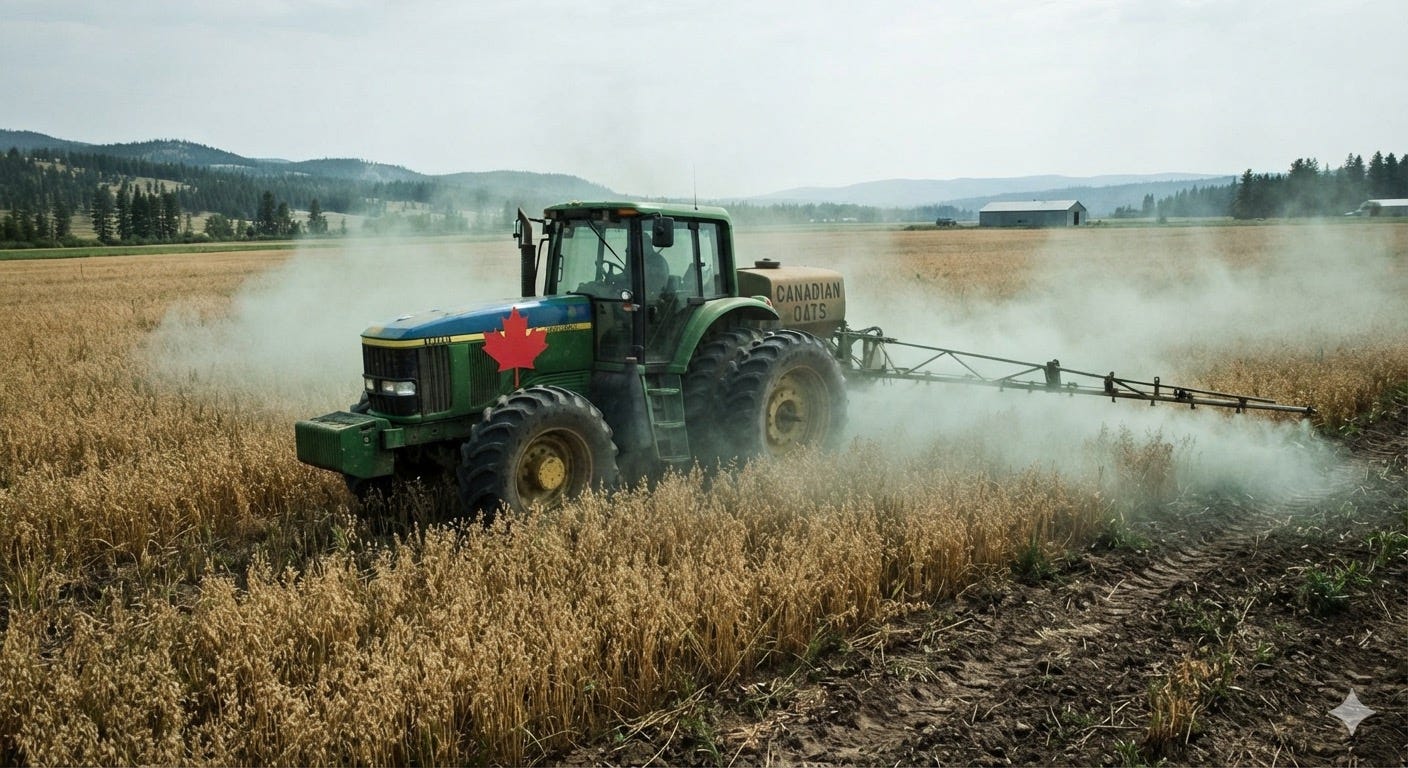
The "Spray and Dry" Connection: The reason Canadian oats have historically struggled with high glyphosate (Roundup) testing scores is closely tied to this northern climate. Because Canadian growing seasons are shorter, farmers frequently use glyphosate as a "desiccant"—a chemical drying agent sprayed directly onto the mature oat crops right before harvest to dry them out quickly before the winter frost sets in. [1, 2, 3, 4]
Where the Oats are Processed
Quaker Oats Facilities: Once harvested in Canada, the raw grains are shipped via railcar down into the United States. Most of America's Quaker Oats are milled at the massive Quaker Oats plant in Cedar Rapids, Iowa, which happens to be the world's largest cereal mill. [1, 2, 3, 4, 5]
Great Value Processing: Walmart partners with third-party, US-based food manufacturers to process and package its private-label oats. Following standard Walmart labeling rules, if the package does not explicitly list a foreign country of origin and states "Distributed by Walmart," it denotes that the final product was legally processed and manufactured inside the USA using these North American grain networks. [1, 2, 3]
What About Clean Brands?
If you switch to clean brands like One Degree Organic Foods, they also primarily source their oats from family farms in Northern Alberta, Canada. However, because they are certified organic, those Canadian farmers are strictly legally banned from using chemical desiccants like glyphosate to dry the crops. [1]
Me: So basically the imports we’ve heard that Canada holds over our heads in the US is contaminated oats. 🤮
Google: It is completely understandable to feel disgusted by that. It feels incredibly backward that a major food staple imported in such massive quantities into the US carries these chemical residues.
The reality of the US-Canada oat trade boils down to a few key systemic factors:
Why Canada Dominates the US Oat Market
Massive Trade Dependence: The US relies on Canada for over 90% of its imported oats. This is because US agricultural policy and subsidies have pushed American farmers to heavily prioritize corn and soybeans instead of oats.
The Sourcing Trap: Large corporations like PepsiCo (which owns Quaker) and Walmart prioritize massive volume and low costs. They buy from the giant Canadian agricultural grain pool, where conventional crops from thousands of different farms are mixed together in railcars, spreading the chemical residues across the entire supply chain.
The Good News: Canada Also Grows the Cleanest Oats
The silver lining is that the problem isn't Canadian soil or the country itself—it is purely the chemical farming method. Because of its perfect climate for oats, Canada is also the world's leading producer of Certified Organic oats.
When you buy organic oats from brands like One Degree Organic Foods or Nature's Path, you are still getting Canadian oats, but you are completely bypassing the "spray-to-dry" harvesting practice. By law, those organic farmers cannot use glyphosate or chlormequat.
If you want to vote with your wallet and completely avoid this conventional supply chain, I can help you look up independent, US-grown organic oat brands or find the best organic options available at your local grocery store.


Comments
Post a Comment