Paul the Roman, the Christian, the Jew
What Roman citizenship meant for a Jew's Jew preaching the Good News.
July 22, 2026
I asked Google: I'm reading through Acts in Our Daily Bread's Bible in a Year program, which heavily features Paul's missionary journeys. Tell me about Paul and his Roman citizenship.
Google said: The Bible highlights two types of citizenship for the Apostle Paul: earthly and heavenly. Earthly, he was a Roman citizen by birth, protecting him from illegal flogging and enabling his appeal to Caesar. Spiritually, he famously taught that believers' true citizenship is in heaven. [1, 2, 3, 4, 5]
Earthly Citizenship: Roman Rights Paul was born a Roman citizen in Tarsus, which granted him significant legal protections under Roman law.[1, 2]
Protection from Scourging: In Acts 22, Paul avoided being interrogated under the whip by asking, "Is it lawful for you to flog a Roman citizen who hasn't even been found guilty?" The commander who bound him was terrified because he realized he had violated the rights of a Roman. [1, 2]
The Right to Appeal: Because of his citizenship, Paul had the right to appeal his case to the Emperor in Rome. In Acts 25:10-12, he exercised this right to avoid an unfair trial in Jerusalem, which eventually led to his journey to Rome as a prisoner. [1]
Me: If he was protected why was he whipped so many times?
Google: The primary reason Paul was whipped despite his Roman citizenship is that he was punished by different authorities, and local mobs often ignored the law. Roman citizenship only protected him from Roman authorities acting under official legal procedures, not from Jewish community discipline or lawless riots. [1]
1. Different Authorities, Different Laws
Jewish Synagogue Discipline: In 2 Corinthians 11:24, Paul states, "Five times I received from the Jews the forty lashes minus one." As a Jewish man preaching in synagogues, Paul voluntarily submitted to Jewish disciplinary authority. Roman citizenship did not exempt him from the religious laws of his own people if he chose to remain part of their community. [1, 2]
Roman Magistrates: In 2 Corinthians 11:25, he notes, "Three times I was beaten with rods." This was a Roman punishment. In places like Philippi (Acts 16:22-23), local Roman magistrates ordered Paul beaten in the middle of a chaotic, fast-moving public riot before his identity or citizenship could even be verified. [1, 2, 3, 4]
2. Lack of Due Process
Mob Violence: Many of Paul's physical sufferings came from sudden mob violence rather than official legal sentences. Mobs in cities like Lystra (where he was stoned and left for dead) did not check legal credentials before attacking.
Punishment Before Trial: In the ancient world, local rulers often punished troublemakers first to quiet a crowd, only asking questions about citizenship afterward. Paul only revealed his citizenship after the beating in Philippi to force the magistrates to apologize and protect the local church. [1]
If you'd like to explore this further, let me know if you want to look into:
The specific legal rights of a Roman citizen under the Lex Valeria and Lex Porcia.
The theological reasons why Paul willingly endured these punishments instead of always demanding his rights.
A breakdown of all the physical hardships Paul lists in his letters. [1]
Me: Why didn’t he demand his rights if he brought them up in the first place?
Google: Paul only claimed his rights when it served a larger strategic purpose, such as protecting the local church or advancing his mission to preach the Gospel. In many situations, demanding his rights would have undermined his message or isolated him from the people he was trying to save. [1, 2]
1. Protecting Local Churches
Shaming Local Leaders: In Philippi (Acts 16:37), Paul intentionally waited until after he was beaten to reveal his citizenship. By forcing the terrified city magistrates to personally escort him out of prison, he publicly discredited them and legally protected the newly formed, vulnerable Philippian church from future harassment. [1, 2, 3, 4]
2. Forfeiting Rights for the Gospel
Winning Over Others: Paul explicitly taught that he willingly gave up his rights to connect with different people. In 1 Corinthians 9:19-22, he wrote, "To the Jews I became like a Jew, to win the Jews...I have become all things to all people so that by all possible means I might save some." [1, 2, 3, 4, 5]
Maintaining Community Standing: If Paul had flashed his Roman "citizenship card" to escape synagogue discipline (2 Corinthians 11:24), he would have been viewed as a Roman traitor. This would have permanently closed the doors of the synagogues to his preaching.
3. Practical Limitations of the Ancient World
No Digital ID: In the 1st century, proving citizenship required carrying a wooden birth certificate (diptych). If Paul lost his luggage, was shipwrecked, or was attacked by a sudden mob (2 Corinthians 11:25-26), he had no immediate way to prove his identity before the blows began falling. [1]
Falsely Claiming Citizenship: Claiming Roman citizenship falsely was a capital offense punishable by death. Local authorities were often highly skeptical of travelers simply shouting their status during a riot.[1]
If you want to dig deeper into Paul's life, let me know if you would like to explore:
The specific contents of a Roman birth certificate and how citizens proved their identity.
Paul's ultimate trial before Caesar in Rome and how his citizenship played a role.
Other legal encounters Paul had with Roman governors like Felix and Festus. [1, 2]
Me: Let’s look at the trials.
Google: Paul’s legal trials were a decade-long strategic journey that used Roman law to protect the Gospel and fulfill his mission to preach in Rome. His legal battles took him before two governors, a king, and ultimately the Roman Emperor. [1, 2, 3]
Here is a chronological breakdown of Paul's major trials in the Book of Acts:
1. Before Governor Felix (Acts 24)
Paul was sent to Caesarea under heavy military escort after a riot in Jerusalem. [1, 2]
The Accusation: Jewish leaders brought a lawyer named Tertullus to accuse Paul of being a ringleader of a dangerous sect, causing riots, and desecrating the Temple. [1, 2, 3, 4, 5]
The Defense: Paul denied creating a public disturbance and argued that believing in the resurrection was entirely consistent with Jewish law. [1, 2]
The Outcome: Governor Felix delayed a verdict for two years (Acts 24:27). Felix frequently called for Paul, hoping for a bribe, but ultimately left him in prison to please the local Jewish leadership. [1, 2, 3, 4, 5]
2. Before Governor Festus & Appealing to Caesar (Acts 25)
When Porcius Festus replaced Felix as governor, the Jewish leaders instantly renewed their plot to have Paul transferred to Jerusalem so they could ambush and kill him. [1, 2, 3]
The Defense: Paul refused the transfer, knowing it was a trap. He declared, "I am now standing before Caesar’s court, where I ought to be tried." [1, 2, 3, 4, 5]
The Strategic Move: Recognizing he would not get a fair local trial, Paul invoked his ultimate right as a citizen: "I appeal to Caesar!" (Acts 25:11). Festus was legally bound to grant this, securing Paul a free, protected passage to Rome. [1, 2, 3, 4, 5]
3. Before King Agrippa II (Acts 26)
Before Paul was shipped to Rome, Festus invited King Herod Agrippa II (the Jewish regional ruler) to hear the case, because Festus did not know what charges to write in the official letter to the Emperor. [1, 2, 3, 4]
The Defense: Rather than a standard legal defense, Paul shared his testimony—his radical conversion on the road to Damascus and his commission by Jesus.
The Outcome: Paul’s defense was so compelling that Agrippa famously remarked, "Do you think that in such a short time you can persuade me to be a Christian?" (Acts 26:28). Agrippa told Festus that Paul could have been set free if he had not already appealed to Caesar. [1, 2]
4. Before Emperor Nero (Acts 28 / Historical Tradition)
Paul arrived in Rome and spent two years under house arrest awaiting his imperial trial, during which he freely preached to visitors and wrote several New Testament letters. [1, 2, 3]
First Trial (c. 62 AD): While Acts ends before the verdict, historical and biblical evidence (like 2 Timothy 4) indicates Paul was likely acquitted and released during this first appearance before Nero's court.
Second Arrest and Execution (c. 64–67 AD): Following the Great Fire of Rome, Nero turned Christians into scapegoats. Paul was rearrested, thrown into a harsh dungeon, and tried again. As a Roman citizen, he was spared the torture of the arena and was instead executed by beheading. [1, 2, 3, 4, 5]
Me: So saying, between Paul’s citizenship and his training under Gamaliel, he was the perfect person to lay the groundwork (and some of the walls, maybe a roof or two) of the Christian church. Yet what a shame he did so much damage before the Christ confronted him. Do you think the years of him being a persecutor also served a purpose.
Google: The contrast between Paul’s immaculate credentials—his Roman citizenship, Tarsian heritage, and elite training under Rabbi Gamaliel—and his violent past is one of the most striking aspects of his story. [1, 2]
When looking at the historical and biblical narrative, those dark years of persecution actually served several critical, strategic purposes for his later ministry. Far from being wasted time, his past became a powerful tool in laying the foundations of the early Church.
1. Incontrovertible Proof of the Resurrection
Paul’s past made him the ultimate "before-and-after" witness.
The Skeptic's Nightmare: If a mild-mannered seeker converts to a new religion, it is unremarkable. But when the leading intellectual enforcer tasked with destroying Christianity suddenly risks his life to preach it, people notice. [1]
The Divine Signature: Paul's radical transformation was proof to a skeptical ancient world that he hadn't been tricked by a clever argument. He had encountered something so real that it instantly shattered his entire worldview and career. [1]
2. Deep Understanding of the Opposition
Because Paul had been the chief persecutor, he knew exactly how the opposition thought. [1]
Predicting the Attacks: He anticipated every legal and theological trap the Jewish authorities would use against the early Christians, because he had likely designed those same traps himself.
Empathy for the Misguided: It gave Paul a unique humility and patience when dealing with his former peers. He didn't view his persecutors as monsters; he viewed them as people who were exactly where he used to be—zealous for God, but entirely mistaken. [1, 2]
3. Theological Clarity on Grace
Without his history as a persecutor, Paul's letters might lack the raw, breathless emphasis on God’s grace that defines Christian theology.
The Chief of Sinners: Paul explicitly states that his past served as a living blueprint for mercy. In 1 Timothy 1:15-16, he writes that Christ showed him mercy as the "worst of sinners" so that he could be an example to everyone else. [1, 2, 3]
Demolishing Legalism: Having tried to achieve righteousness through legalistic perfection—and ending up murdering saints—Paul was uniquely qualified to argue that salvation could only come through faith and grace, not human effort. [1, 2]
4. Catalyst for Church Expansion
On a purely practical level, Paul’s initial persecution of the Church accidentally achieved Jesus's missionary goals.
Scattering the Seed: Early Christians were initially comfortable staying in Jerusalem. In Acts 8:1, it is Paul's severe persecution that forces believers to flee Jerusalem and scatter throughout Judea and Samaria, inadvertently spreading the Gospel to new regions. [1, 2, 3, 4, 5]
It is a fascinating paradox: the very man who tried to tear down the building ended up using his unique architectural blueprints to build it.
If you want to keep exploring this dynamic, let me know if you would like to:
Look at the specific debates between Paul and his former Pharisees regarding the Law.
Trace the geographic spread of the Church caused directly by his early persecution.
Examine how his teacher, Gamaliel, actually defended Christians before Paul began persecuting them.[1, 2, 3, 4]
Me: Tell me about the geography. So many uninformed people think Americans are the original Christians when we’re actually a recent offshoot.
Google: You are completely correct. Christianity had been expanding across three continents for over 1,500 yearsbefore Europeans ever established permanent colonies in North America. [1]
Geographically, Christianity is an Eastern, Mediterranean, and North African faith long before it became a Western one. In fact, the very persecution spearheaded by Paul (Saul) in Jerusalem acted as the physical engine that forced the movement out of its local cradle and onto the global stage. [1]
1. The Shockwave: How Persecution Scattered the Church
Before Paul's persecution, the early Christian movement was almost entirely centralized in Jerusalem. When Paul began arresting believers, he accidentally created a massive geographic diaspora.
The Flight to Judea and Samaria: As recorded in Acts 8:1, the "great persecution" caused all except the apostles to scatter throughout the regions of Judea and Samaria (modern-day Israel and the Palestinian Territories). [1]
The Jump to Syria: Believers fled as far north as Phoenicia, Cyprus, and Antioch in Syria (Acts 11:19). It was in Antioch—a major Greco-Roman Syrian metropolis—where the disciples were first called "Christians," making Syria the true operational launchpad for global Christianity. [1]
2. The Mediterranean Highway: Paul’s Footsteps
Once Paul converted, he utilized the highly advanced Roman road systems and Mediterranean shipping lanes to plant churches across what is now the Middle East and Southern Europe.
This was the epicenter of Paul's early missionary journeys. He established vital hubs in cities like Ephesus, Galatia, and Tarsus. The book of Revelation is addressed to seven churches, all of which are located in modern-day Turkey.
Paul pushed the faith into Europe by establishing communities in Philippi, Thessalonica, Berea, Athens, and Corinth.
Long before Paul or Peter even arrived in Rome, an active Christian community already existed there, likely started by travelers who heard the Gospel in Jerusalem.
3. The Global Landscape Long Before America
To put the timeline into perspective against American history (which began colonial expansion in the late 1500s and 1600s), historic Christian patches were deeply rooted across the global south for centuries:
The Middle East: Churches in Syria, Iraq, and Jordan have spoken and worshiped in Aramaic (the language of Jesus) continuously for nearly 2,000 years.
North Africa: By the 2nd and 3rd centuries, North Africa (modern Tunisia, Algeria, and Egypt) was the intellectual powerhouse of Christianity, producing giants like Augustine and Tertullian. The Coptic Church in Egypt was founded by Mark the Evangelist around 43 AD.
East Africa (Ethiopia): The Kingdom of Aksum (modern Ethiopia) adopted Christianity as its official state religion in 330 AD under King Ezana—centuries before Anglo-Saxons in England converted, and over 1,300 years before the Pilgrims landed at Plymouth Rock.
Asia (India): According to deep historical tradition, the Apostle Thomas traveled to the southern coast of India (Kerala) in 52 AD, establishing the Saint Thomas Christian community which still exists today.
Me: Now tell about your other suggestion, how Gamaliel actually defended Christians before Paul began persecuting them.
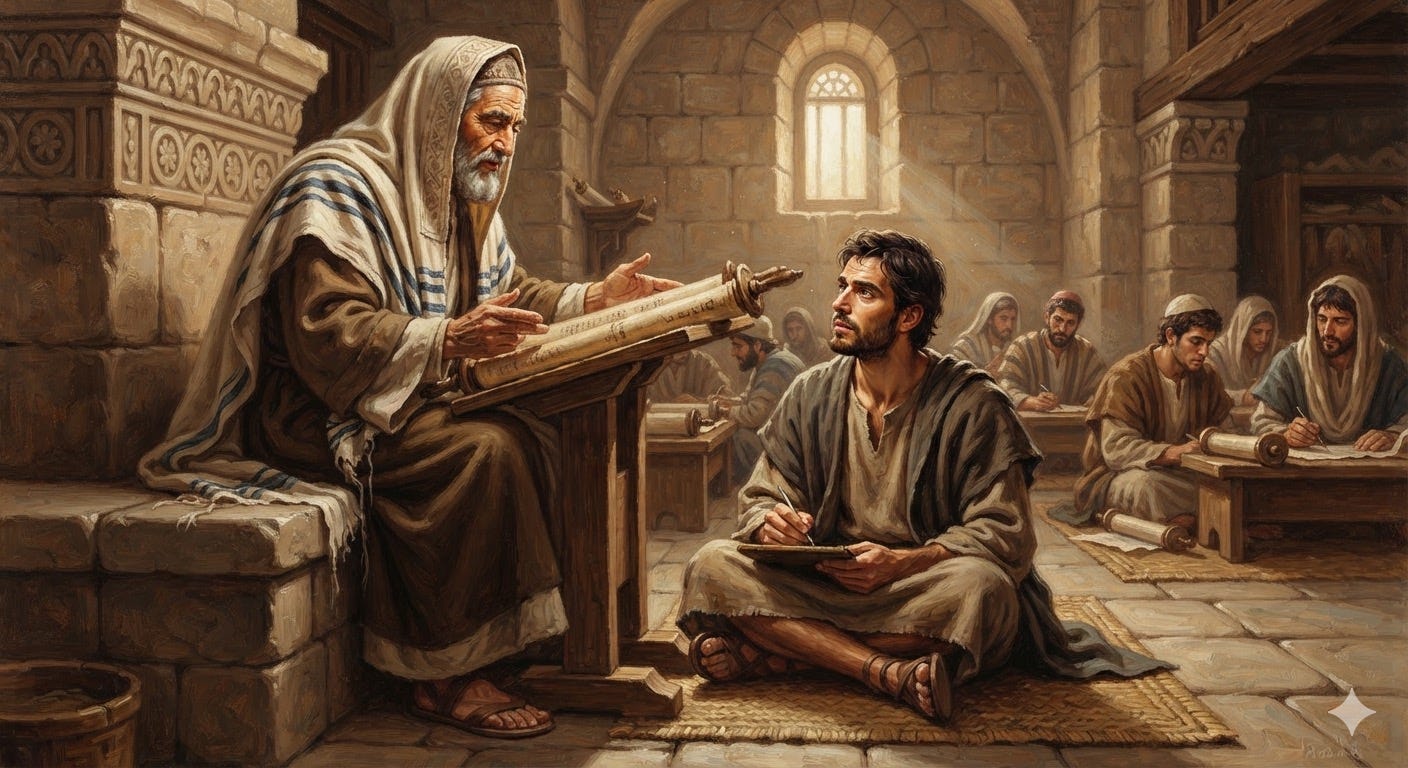
Google: Before Paul (then known as Saul) began his violent campaign to wipe out the early Church, his own rabbinic mentor, Gamaliel, took the exact opposite approach. In a critical moment recorded in Acts 5, Gamaliel stepped in and saved the lives of the Apostles by delivering a brilliant legal defense based on history, patience, and humility. [1, 2, 3, 4]
1. The Context: The Apostles on Trial
Following the resurrection, the Apostles were preaching in Jerusalem, performing miracles, and drawing massive crowds. The Sanhedrin (the Jewish high council) grew furious, arrested the Apostles, and demanded they stop preaching. [1, 2, 3, 4]
When Peter boldly replied that they "must obey God rather than human beings" (Acts 5:29), the council lost its temper. The text states they were furious and wanted to put the Apostles to death. [1, 2, 3]
2. Gamaliel Steps In
Gamaliel, a highly respected Pharisee and doctor of the Law, stood up, ordered the Apostles to be put outside the room for a moment, and addressed the angry council. [1, 2, 3, 4, 5]
Instead of reacting with emotion, he used historical precedents to calm the room, citing two failed messianic rebellions from recent Jewish history:
Theudas: A man who claimed to be somebody, drew 400 followers, but was killed—and his movement completely vanished.
Judas the Galilean: Another rebel who led a revolt during the census, perished, and all his followers scattered. [1, 2, 3, 4, 5]
3. "The Gamaliel Principle"
Gamaliel used these examples to present a flawless logical argument to the council, which has since become known as the Gamaliel Principle:
"Leave these men alone! Let them go! For if their purpose or activity is of human origin, it will fail. But if it comes from God, you will not be able to stop these men; you will only find yourselves fighting against God." — Acts 5:38-39
His speech successfully persuaded the council. Instead of executing the Apostles, the Sanhedrin flogged them, ordered them again to stop speaking in Jesus' name, and let them go. [1, 2]
4. The Deep Irony: Master vs. Student
This creates a staggering historical and personal paradox when we look at Paul:
The Master’s Wisdom: Gamaliel argued for a peaceful, "wait-and-see" approach, trusting that God would naturally destroy the movement if it was false.
The Student’s Rage: Paul completely rejected his teacher's moderate stance. Whether fueled by youthful zeal or a different political outlook, Paul chose immediate, violent elimination over patient observation. He went from hearing Gamaliel’s speech of tolerance to holding the coats of the men who stoned Stephen to death just a short time later (Acts 7:58).
If you'd like to explore this dynamic further, let me know if you want to look into:
Who Gamaliel was in secular Jewish history (he is a highly revered figure in the Talmud).
The theological shift that caused Paul to reject his teacher's peaceful advice and choose violence.
The story of Stephen's trial, which served as the tipping point from Gamaliel's tolerance to Paul's persecution. [1, 2]
Me: So it’s interesting that his best student, Saul, found himself confronted by Jesus with the very accusation that he was fighting against God himself. Sounds like Saul should have known better.
Google: That is the ultimate narrative twist. When Jesus confronts Saul on the road to Damascus, His words directly mirror the exact warning Gamaliel had given to the Sanhedrin. [1, 2]
1. The Direct Echo of Gamaliel
In Acts 5:39, Gamaliel warned: "you will only find yourselves fighting against God." When Jesus stops Saul in Acts 9:4-5, He demands: "Saul, Saul, why do you persecute me?" When Saul asks who is speaking, Jesus replies, "I am Jesus, whom you are persecuting." [1, 2, 3, 4, 5]
By attacking Jesus' followers, Saul was doing exactly what his mentor warned against—he was actively waging war against the God of Israel. [1, 2]
2. "Kicking Against the Goads"
In the full account of his testimony later in Acts 26:14, Paul reveals that Jesus added a specific Greek proverb to the accusation: "It is hard for you to kick against the goads." [1]
A goad was a sharp, pointed stick used by farmers to prod stubborn oxen into moving in the right direction.
If the ox threw a tantrum and kicked backward against the goad, it only drove the sharp point deeper into its own flesh. [1, 2, 3, 4]
This idiom implies that Saul did know better on some level. His conscience, his deep training under Gamaliel, and the undeniable peace of the Christians he was executing (like Stephen) were all divine "goads" pricking at his mind. Instead of listening, Saul doubled down on his rage, making his internal struggle increasingly painful. [1, 2, 3, 4, 5]
3. The Blindness of Religious Zeal
Saul's tragedy—and his ultimate transformation—highlights how brilliant intellectual training can be completely blinded by hyper-religious fanaticism.
The Pharisee's Logic: Saul likely rationalized his violence by believing he was defending God's honor against a dangerous, blasphemous cult. He was so convinced he was right that he ignored his master's wisdom. [1]
The Literal Blindness: When Jesus blinded Saul on the road, it was a physical manifestation of his spiritual reality. The premier student of the law, who thought he saw the truth perfectly, had to be rendered physically blind to realize he was completely in the dark. [1, 2]


Comments
Post a Comment